
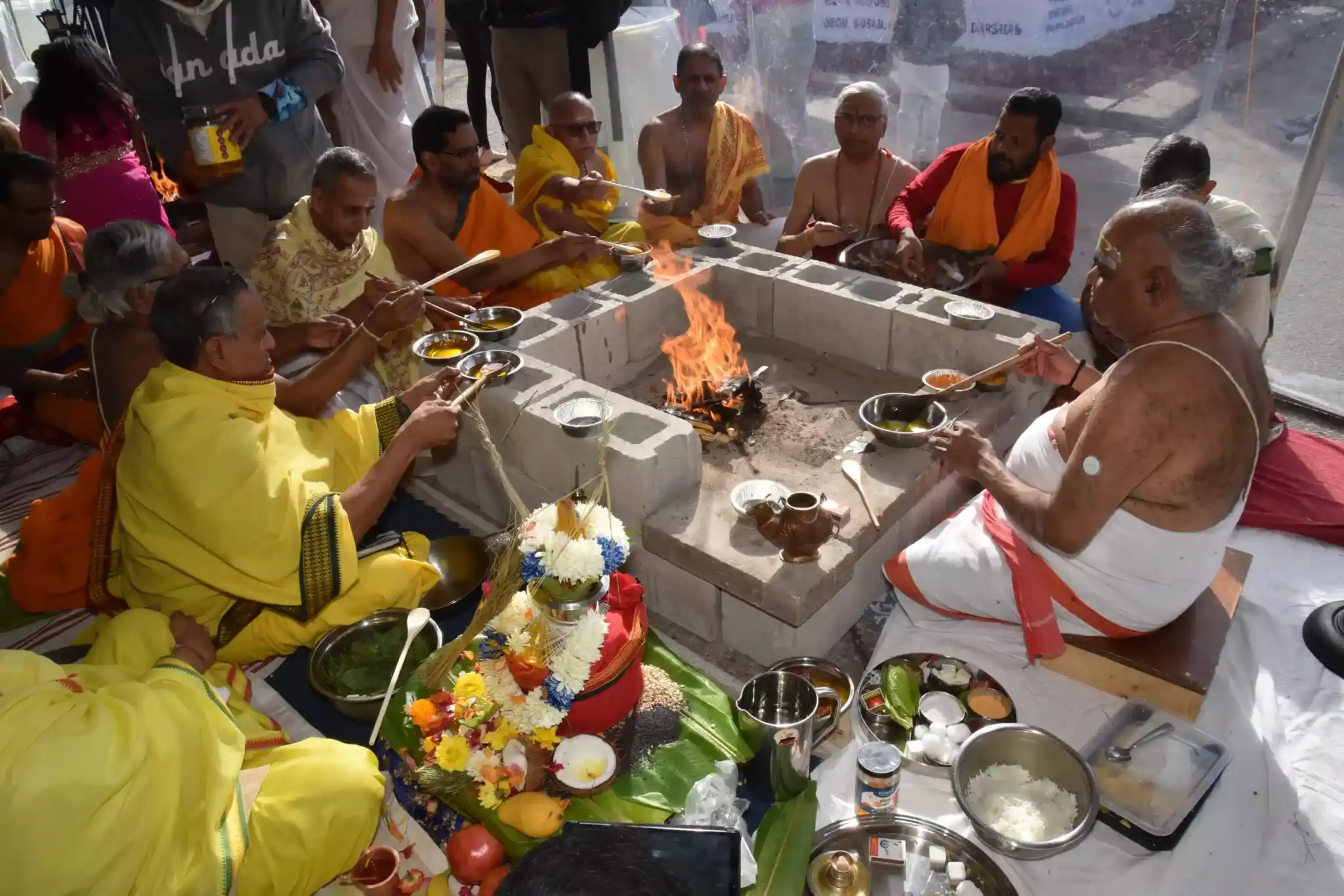
Priests at Vishnu mandir are able to perform pujas throughout the year for devotees. Below is the short list but not limited to the following.
- Graha Pravesh Puja
- Graha Shanti Puja
- Nav Grahah Puja
- Durga puja, Hanuman puja, Shiva puja, Saraswati puja, Lakshmi puja, Satya Narayan puja etc.
- Opening of a new business (Nutan Vyapar puja)
- Blessing of a car
- Anniversary puja
- Birthday puja
Contact: Pt. Bhoj at 416-670-7554 or Lata Ji at 905-886-1724, [email protected]
Pujas can be performed throughout the year for any devotee wishing to do so. If you have a Graha Pravesh and in need of spiritual guidance, we can help you. Below is the list of pujas performed in the temple:-
- Graha Pravesh Puja
- Graha Shanti Puja
- Durga Puja, Hanuman Puja, Shiva Puja, Saraswati Puja, Lakshmi Puja, Satya Narayan Puja etc.
- Blessing of a home
- Opening of a new business
- Blessing of a car
- Anniversary Puja
- Birthday Puja and MUCH, MUCH MORE!
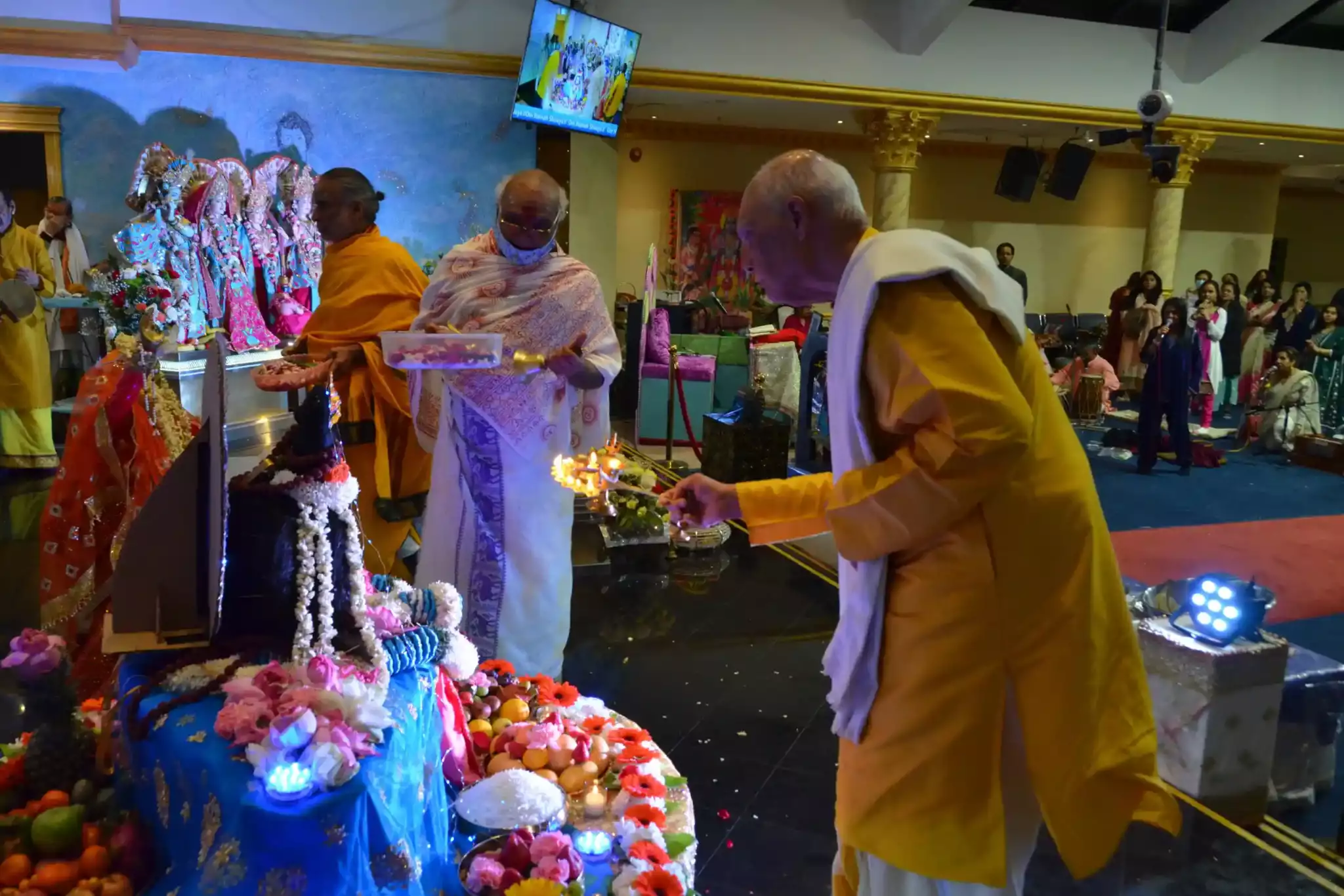
Samaskaras
Samaskaras are the Hindu rituals or rites of passage – Ceremonies that mark important transitional periods in a person’s life, such as Birth, Upnayan (Janeo), marriage, having children, and death. Priests at Vishnu Mandir are able to perform pujas for all 16 of the major samskaras.
Garbhadhana
(Conception)
This samskara is performed by parents and consists of fervent prayer for a child in order to fulfil the obligation to continue the human race.
Punsavana
(Fetus protection)
This samskara is performed during the third or fourth month of pregnancy. A priest recites Vedic hymns to invoke divine qualities in the child.
Simantonnayana
(Satisfying the cravings of the pregnant mother)
This samskara is similar to a baby shower, and is, performed during the seventh month of pregnancy when prayers are offered to God for the healthy physical and mental growth of the child.
Jatakarma
(Child birth)
Mantras are recited for a healthy and long life of the child at his birth.
Namakaran
(Naming the child)
The name for the baby is selected such that its meaning can inspire the child to follow the path of righteousness.
Nishkramana
(Taking the child outdoors for the first time)
This samskara is performed in the fourth month after birth when the child is moved outside the house.
Annaprasana
(Giving solid food)
In the sixth, seventh or eighth month child is given solid food.
Chudakarma a.k.a. Mundan
(Hair cutting)
The name for the baby is selected such that its meaning can inspire the child to follow the path of righteousness.
Karnavedha
(Ear piercing)
This samskara is performed in the third or fifth year.
Upanayana
(Sacred thread ceremony)
This introduces the male child to a teacher in order to receive education and marking the entry of the child to Brahmacharya.
Vedarambha
(Study of Vedas)
This samskara is performed at the time of Upanayana or within one year. The Guru teaches the Gayatri Mantra.
Samavartana
(Returning home after completion of education)
This samskara is performed at the age of about 25 years.
Vivaha
(Marriage)
Vanaprastha
(Preparation for renunciation)
This samskara is performed at the age of 50 to celebrate the departure from the householder stage to the Vanaprastha stage when the person begins to engage in spiritual activities.
Sannyasa
(Renunciation)
This samskara is performed after Vanaprastha.
Antyesthi
(Cremation)
This is the final samskara performed after death by his or her descendents.